
Sweet potato gnocchi are a delightful twist on a classic Italian comfort food, and trust me, once you try them, you’ll understand the obsession. These pillowy dumplings are far more than just potato pasta; they’re a vibrant celebration of autumn’s bounty, infused with a natural sweetness and a beautiful golden hue. Forget the store-bought stuff that often falls flat; making your own sweet potato gnocchi from scratch is surprisingly rewarding and yields a texture that’s both tender and satisfyingly chewy. The subtle sweetness of the roasted sweet potato pairs exquisitely with a variety of sauces, from a simple sage butter to a rich, creamy gorgonzola. It’s this versatility, combined with their comforting nature and stunning visual appeal, that makes sweet potato gnocchi a dish I return to again and again, perfect for a cozy weeknight dinner or an impressive weekend feast.

Sweet Potato Gnocchi
There’s something incredibly comforting and satisfying about a plate of homemade gnocchi. While potato gnocchi is a classic, I’ve recently fallen head over heels for sweet potato gnocchi. The natural sweetness of the sweet potato adds a wonderful depth of flavor, and its vibrant orange hue makes for a visually stunning dish. Don’t be intimidated by making gnocchi from scratch; it’s surprisingly achievable and incredibly rewarding. The key is to handle the dough gently and not overwork it, ensuring light and fluffy dumplings. This recipe is perfect for a cozy weeknight dinner or a special occasion.
Ingredients:
Cooking Instructions:
The journey to delicious sweet potato gnocchi begin extracts with preparing the sweet potatoes. This step is crucial for achieving the right texture in your gnocchi. You want them to be completely cooked through and dry, as excess moisture will make the dough sticky and difficult to work with. I prefer roasting my sweet potatoes for this recipe. Roasting caramelizes the natural sugars, intensifying their sweetness and creating a drier flesh compared to boiling. Preheat your oven to 200°C (400°F). Wash the sweet potatoes thoroughly and prick them a few times with a fork. Place them on a baking sheet lined with parchment paper and roast for about 45-60 minutes, or until they are very tender when pierced with a knife. The skin should be slightly wrinkled, and they should feel soft. Once cooked, let them cool just enough so you can handle them, but still warm. This is important as warm potato mashes more easily and is drier than cold potato.
While the sweet potatoes are still warm, halve them lengthwise and scoop out the flesh into a large bowl. Discard the skins. Using a potato masher or a fork, mash the sweet potato flesh until it’s as smooth as possible. It’s important to get rid of any lumps at this stage, as these can affect the texture of your gnocchi. If you want to be extra sure of a smooth consistency, you can press the mashed sweet potato through a fine-mesh sieve. Once mashed, let the sweet potato cool completely. This is a critical step. Warm sweet potato contains more steam and moisture. Allowing it to cool not only makes it easier to handle but also allows some of the moisture to evaporate, leading to a better dough consistency. Spreading the mashed sweet potato on a plate can help it cool faster.
Once the sweet potato is completely cool, it’s time to introduce the flour. Add the 180g of plain white flour to the mashed sweet potato. If you’re using gluten-free flour, make sure it’s a blend that works well for binding, as gluten-free flours can vary. Add the pinch of salt at this stage if you’re using it. Begin extract to gently mix the flour into the sweet potato with a fork or your hands. The goal here is to incorporate the flour just until a dough starts to form. Overworking the dough at this stage will develop the gluten (in regular flour) too much, resulting in tough gnocchi. It should look shaggy and not too sticky. If the dough feels excessively wet, you can add a tablespoon more flour at a time, but be very conservative. You want the dough to be soft and pliable, not stiff.
Now comes the fun part: shaping the gnocchi. Lightly flour a clean work surface. Turn the dough out onto the floured surface. Knead the dough very gently for just a minute or two until it comes together into a cohesive ball. Again, avoid overworking it. Divide the dough into 4-6 equal portions. Take one portion and gently roll it with your hands into a long rope, about 1.5-2 cm (about ¾ inch) in diameter. Use a lightly floured bench scraper or a knife to cut the rope into small, pillow-shaped pieces, about 2 cm (about ¾ inch) long. These are your gnocchi!
To give your gnocchi their classic ridged appearance and to help them hold sauce better, you can gently roll each piece over the tines of a fork or a gnocchi board. To do this, place a piece of gnocchi on the fork’s tines with your thumb at one end and gently press and roll it down the tines. This creates the characteristic grooves. If you don’t have a gnocchi board, the fork tines alone work perfectly. Place the shaped gnocchi on a lightly floured baking sheet in a single layer. Repeat this process with the remaining portions of dough. As you shape them, it’s a good idea to place them on a baking sheet lined with parchment paper, ensuring they don’t touch each other, to prevent them from sticking. If you’re not cooking them immediately, you can freeze them at this stage.
Finally, it’s time to cook these delightful dumplings. Bring a large pot of salted water to a rolling boil. Carefully drop the gnocchi into the boiling water in batches. Don’t overcrowd the pot, as this will lower the water temperature and prevent the gnocchi from cooking evenly. The gnocchi are ready when they float to the surface, which usually takes about 2-4 minutes. Once they float, let them cook for another minute to ensure they are cooked through. Using a slotted spoon, gently remove the cooked gnocchi from the water. At this point, you can toss them directly into your favorite sauce. I love a simple brown butter and sage sauce, a creamy tomato sauce, or even a pesto. The sweetness of the gnocchi pairs beautifully with a wide range of flavors. Serve immediately and enjoy the fruits of your labor!

Conclusion:
There you have it! Mastering sweet potato gnocchi is a truly rewarding culinary adventure. This recipe offers a delightful twist on a classic Italian favorite, bringin extractg the natural sweetness and beautiful color of sweet potatoes to your dinner table. The result is a pillowy, tender dumpling that’s surprisingly easy to make and incredibly versatile. They’re perfect for a comforting weeknight meal or an impressive dish to share with loved ones. Don’t be intimidated; the process is straightforward, and the payoff is immense. Give these sweet potato gnocchi a try – I promise you won’t regret it!
For serving, consider a simple sage and browned butter sauce to let the gnocchi shine. Alternatively, a creamy gorgonzola sauce, a vibrant pesto, or even a hearty bolognese would be delicious pairings. Feel free to experiment with toppings like toasted walnuts, crum extractbled ricotta salata, or a sprinkle of fresh parsley. For variations, try adding a pinch of nutmeg or cinnamon to the dough for an extra layer of warmth, or even incorporating roasted garlic for a savory depth.
Frequently Asked Questions:
Q: My gnocchi are too sticky when I’m rolling them. What can I do?
A: If your dough is too sticky, it often means it’s too wet. Gently add a little more flour, a tablespoon at a time, until it’s manageable. Be careful not to overwork the dough, as this can make the gnocchi tough. Ensuring your sweet potatoes are well-drained after cooking is also crucial to avoid excess moisture.
Q: Can I make sweet potato gnocchi ahead of time?
A: Absolutely! You can refrigerate uncooked gnocchi on a floured baking sheet, separated by parchment paper, for up to 24 hours. For longer storage, freeze them in a single layer until firm, then transfer them to a freezer-safe bag. They will cook directly from frozen; just add a couple of extra minutes to the boiling time.
Q: What kind of sweet potatoes work best?
A: Most varieties of sweet potatoes will work well, but those with a drier, starchier flesh are generally preferred for gnocchi. Varieties like Jewel or Beauregard tend to have a good balance of moisture and starch. Avoid overly watery sweet potatoes if possible.
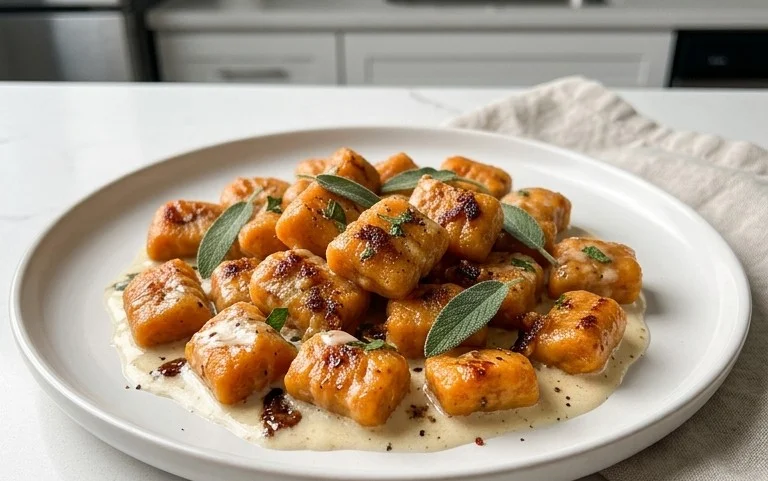
Sweet Potato Gnocchi
Soft and pillowy homemade sweet potato gnocchi, a delicious and comforting vegetarian pasta alternative. Easily customizable with your favorite sauces.
Ingredients
-
2 medium sweet potatoes (about 680-700g)
-
180g plain white flour, plus more for dusting (or gluten-free flour)
-
Pinch of salt (optional)
Instructions
-
Step 1
Preheat oven to 200°C (400°F). Pierce sweet potatoes with a fork and bake for 45-60 minutes, or until very tender. -
Step 2
Once cool enough to handle, halve the sweet potatoes and scoop the flesh into a bowl. Mash until smooth. Ensure no lumps remain. -
Step 3
Gradually add the flour to the mashed sweet potato, mixing with a fork or your hands until a soft, slightly sticky dough forms. You may not need all the flour. Add the pinch of salt if using. -
Step 4
Lightly flour a clean work surface. Turn the dough out and gently knead for about 30 seconds until just combined. Do not overwork. -
Step 5
Divide the dough into 4 portions. Roll each portion into a long rope, about 2cm (¾ inch) in diameter. Cut the ropes into 2cm (¾ inch) pieces. -
Step 6
You can leave the gnocchi as is, or gently roll each piece over the tines of a fork or a gnocchi board to create ridges for sauce to cling to. Place on a lightly floured baking sheet. -
Step 7
Bring a large pot of salted water to a rolling boil. Carefully add the gnocchi in batches, ensuring not to overcrowd the pot. They are cooked when they float to the surface (about 2-3 minutes). -
Step 8
Remove cooked gnocchi with a slotted spoon and serve immediately with your favorite sauce. Pan-frying the cooked gnocchi in butter and sage is also delicious.
Important Information
Nutrition Facts (Per Serving)
It is important to consider this information as approximate and not to use it as definitive health advice.
Allergy Information
Please check ingredients for potential allergens and consult a health professional if in doubt.


Leave a Comment