


Lemon Blueberry Sourdough Bread Recipe! Oh, the sheer delight that this combination brings to my kitchen! If you’re a fan of the tangy, complex flavor of sourdough, but crave a touch of bright, fruity sweetness, then this is the recipe you’ve been waiting for. It’s a symphony of textures and tastes, where the chewy, airy crum extractb of a perfectly proofed sourdough meets bursts of juicy blueberries and the zesty perfume of fresh lemon. What makes this particular Lemon Blueberry Sourdough Bread Recipe so special? It’s the magical interplay of natural fermentation with vibrant summer flavors, creating a loaf that’s both comforting and utterly sophisticated. This isn’t just bread; it’s an experience. Imagin extracte slathering a warm slice with butter, the lemon notes dancing with the sweetness of the blueberries, all underpinned by that signature sourdough tang. It’s the perfect treat for a leisurely brunch, a delightful accompaniment to afternoon tea, or simply an irresistible way to elevate your everyday toast. Get ready to impress yourself and everyone lucky enough to share a slice!

Ingredients:
- 50g active sourdough starter
- 350g water
- 500g bread flour
- 11g salt
- 150g fresh blueberries
- zest of a lemon
- 8 Tablespoons butter, room temperature (113g)
- 1/2 cup fresh blueberries, mashed (75g)
- 2 Tablespoons honey (45g)
- a pinch of salt
Preparing the Dough
Step 1: Autolyse and Starter Integration
The first step in creating our delightful Lemon Blueberry Sourdough Bread Recipe is to combine the flour and water for an autolyse. In a large mixing bowl, weigh out your 500g of bread flour and add 350g of lukewarm water. Mix with your hands or a spatula until just combined. You’ll notice it will be shaggy and there might be some dry bits of flour. This resting period allows the flour to fully hydrate, gluten development to begin extract, and makes the dough more extensible. Let this mixture sit, covered, for 30 minutes to an hour. After the autolyse, add your 50g of active sourdough starter to the bowl. Dimple it into the dough with your fingers,gin extracten begin to gently mix and fold the dough over itself until the starter is fully incorporated. This is a crucial step for building strength, so don’t be afraid to get your hands in there! The dough will start to feel more cohesive.
Step 2: Adding Salt and Initial Strength Building
Once the sourdough starter is well integrated, it’s time to add the 11g of salt. Sprinkle the salt evenly over the surface of the dough. Again, use your hands to gently incorporate the salt by pinching and folding the dough. It might feel a bit sticky at first, but keep working it. After the salt isgin extractded, we’ll begin the process of building dough strength through a series of “stretch and folds.” Let the dough rest for about 20-30 minutes, covered. Then, wet your hands slightly to prevent sticking. Reach under one side of the dough, gently stretch it upwards, and fold it over onto itself. Rotate the bowl a quarter turn and repeat this process, stretching and folding, four times in total. This movement helps to develop the gluten network without intense kneading. Perform these stretch and folds every 30 minutes for about 2-3 hours, or until the dough becomes noticeably smoother, more elastic, and passes the “windowpane test” – where you can stretch a small piece of dough thin enough to see light through it without it tearing.
Incorporating Flavors and Bulk Fermentation
Step 3: Flavor Infusion and Blueberry Addition
Now for the exciting part: infusing our bread with vibrant lemon and blueberry flavors! Once your dough has completed its bulk fermentation and has visibly increased in volume (it should be about 30-50% larger), it’s time to add the flavor elements. Gently turn the dough out onto a lightly floured surface. For the lemon flavor, we’ll use the zest of one lemon. Ensure you only zest the yellow part of the peel, as the white pith can be bitter. Scatter the lemon zest evenly over the surface of the dough. Next, we’ll add the 150g of fresh blueberries. I like to gently press them into the surface of the dough so they agin extractre. Now, carefully begin to fold the dough over itself, encasing the lemon zest and blueberries. Be gentle to avoid bursting too many blueberries at this stage, as we want some whole ones for bursts of flavor and texture. Fold gin extract dough like an envelope, bringing the edges towards the center. Once incorporated, you can perform a few more gentle stretch and folds to ensure everything is distributed evenly throughout the dough.
Step 4: Shaping and Second Fermentation (Proofing)
After incorporating the blueberries and lemon zest, let the dough rest for about 20 minutes, covered, to allow it to relax. Then, it’s time for shaping. Gently shape the dough into your desired loaf form – either a round boule or an oblong batard. The key here is to create surface tension without degassing the dough too much. You can do this by gently pulling the dough towards you, creating a taut skin on top. Once shaped, place the dough seam-side up into a well-floured banneton or a bowl lined with a floured tea towel. Cover the banneton and place it in the refrigerator for its second fermentation, also known as proofing. This overnight cold proof (typically 12-18 hours) is essential for developing deep flavor and making the dough easier to score. The cold temperature slows down the yeast activity, allowing enzymes to work their magic.
Baking and Finishing Touches
Step 5: Baking to Golden Perfection
The next day, preheat your oven with a Dutch oven or baking stone inside to 475°F (245°C) for at least 30 minutes. This ensures your baking vessel is screaming hot, which is vital for achieving a great oven spring. Once the oven is preheated, carefully invert your proofed dough onto a piece of parchment paper. Using a sharp razor blade or lame, score the top of the dough. A simple slash or an intricate pattern works well. Carefully transfer the dough, on the parchment paper, into the hot Dutch oven. Place the lid on the Dutch oven and bake for 25 minutes. After 25 minutes, carefully remove the lid. You’ll see the loaf has expanded beautifully. Reduce the oven temperature to 450°F (230°C) and continue baking for another 20-25 minutes, or until the crust is a deep golden brown and the internal temperature of the bread reaches at least 200°F (93°C). For a beautiful sheen, you can brush the top with a little water during the last 10 minutes of baking.
Preparing the Delicious Glaze
Step 6: Creating the Honey-Lemon Glaze
While your bread is cooling, let’s prepare a delightful glaze to enhance its flavor and appearance. In a small bowl, combine the 8 tablespoons of softened butter (which should be at room temperature, making it easy to work with), the 1/2 cup of mashed blueberries, the 2 tablespoons of honey, and a pinch of salt. Using a fork or a small whisk, vigorously beat these ingredients together until they are well combined and form a smooth, creamy mixture. The mashed blueberries will lend a beautiful subtle color and fruity sweetness to the glaze, while the honey adds a lovely caramel note and shine. The pinch of salt helps to balance the sweetness. This glaze is designed to be spread over the warm bread just before serving, infusing it with an extra layer of sweet, tangy, and buttery goodness. It complements the lemon and blueberry flavors already baked into the bread perfectly.
Once the bread has cooled slightly and is still warm, spread this luscious glaze generously over the top. The warmth of the bread will help melt the butter, allowing the glaze to meld beautifully into the crust. Allow the bread to cool further on a wire rack before slicing and enjoying its incredible aroma and taste.
Conclusion:
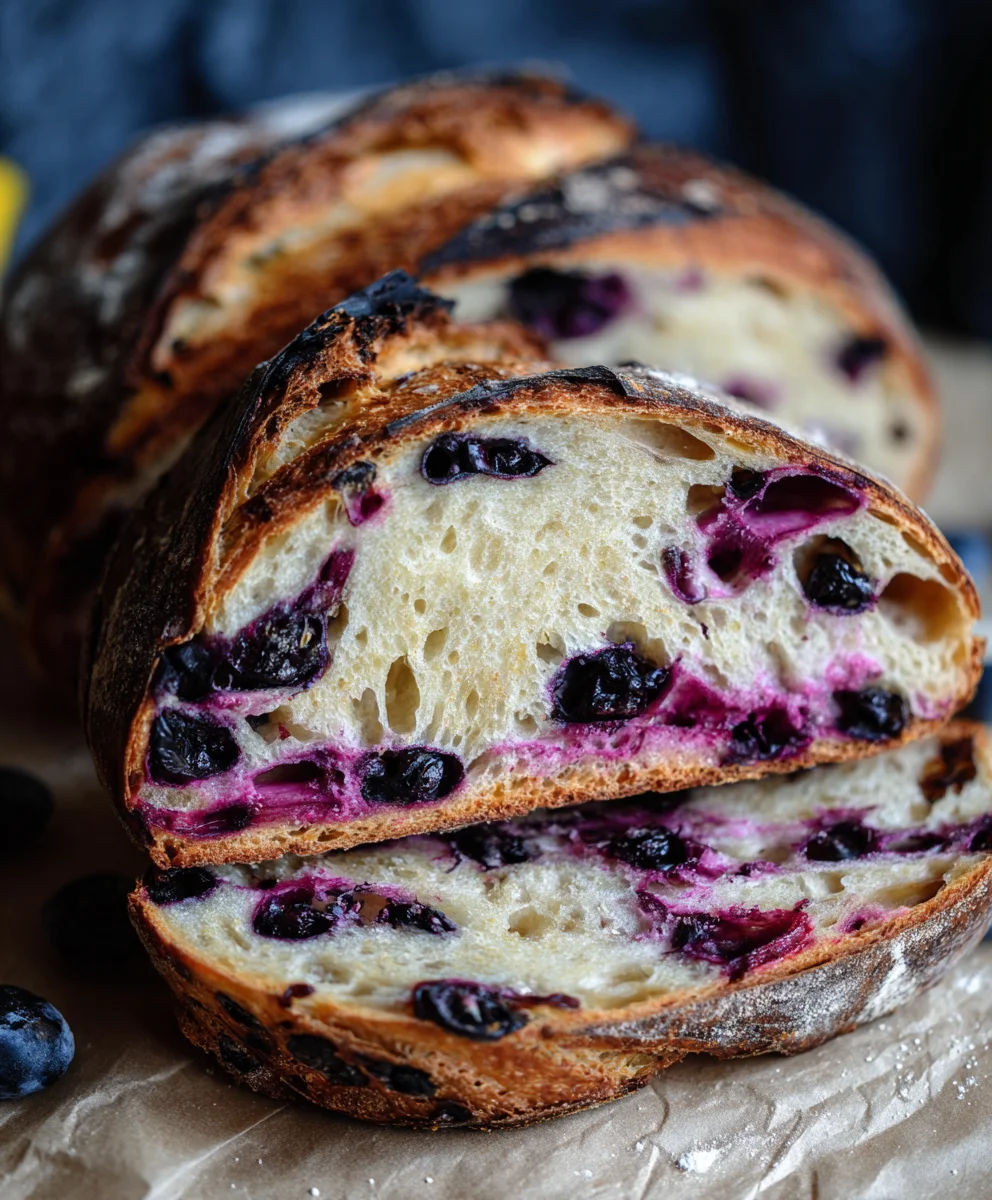
And there you have it – your very own, delicious Lemon Blueberry Sourdough Bread Recipe! This recipe delivers a beautiful tang from the sourdough, bright citrus notes from the lemon zest, and bursts of juicy sweetness from the blueberries. It’s a truly satisfying bake that’s perfect for sharing, or for treating yourself to a slice of pure joy. This bread is wonderfully versatile; try it toasted with a smear of butter for breakfast, or serve it alongside a fresh salad for a delightful lunch. You can also get creative with variations! Consider adding a sprinkle of chopped almonds to the batter for extra crunch, or perhaps a drizzle of lemon glaze once it’s cooled for an added touch of sweetness.
Don’t be intimidated by sourdough! The process is rewarding, and the result is truly special. Embrace the journey and enjoy every step of making this incredible Lemon Blueberry Sourdough Bread Recipe. Happy baking!
Frequently Asked Questions:
Can I use frozen blueberries?
Yes, you can use frozen blueberries. It’s best to toss them in a tablespoon of flour before adding them to the dough to help prevent them from sinking to the bottom. You might also need to bake the bread a few minutes longer to ensure they are fully cooked through.
My sourdough starter isn’t very active. Will this recipe still work?
While an active and healthy sourdough starter is ideal for optimal rise and flavor, this recipe can still be successful with a moderately active starter. Ensure your starter is fed and bubbly at least 4-6 hours before you plan to mix your dough. If it’s very sluggish, you might find the bread has a denser crum extractb and less rise than expected.
How long does Lemon Blueberry Sourdough Bread Recipe last?
Stored properly at room temperature in an airtight container or bread bag, this bread will stay fresh for 2-3 days. For longer storage, you can slice and freeze it, then toast slices from frozen as needed.
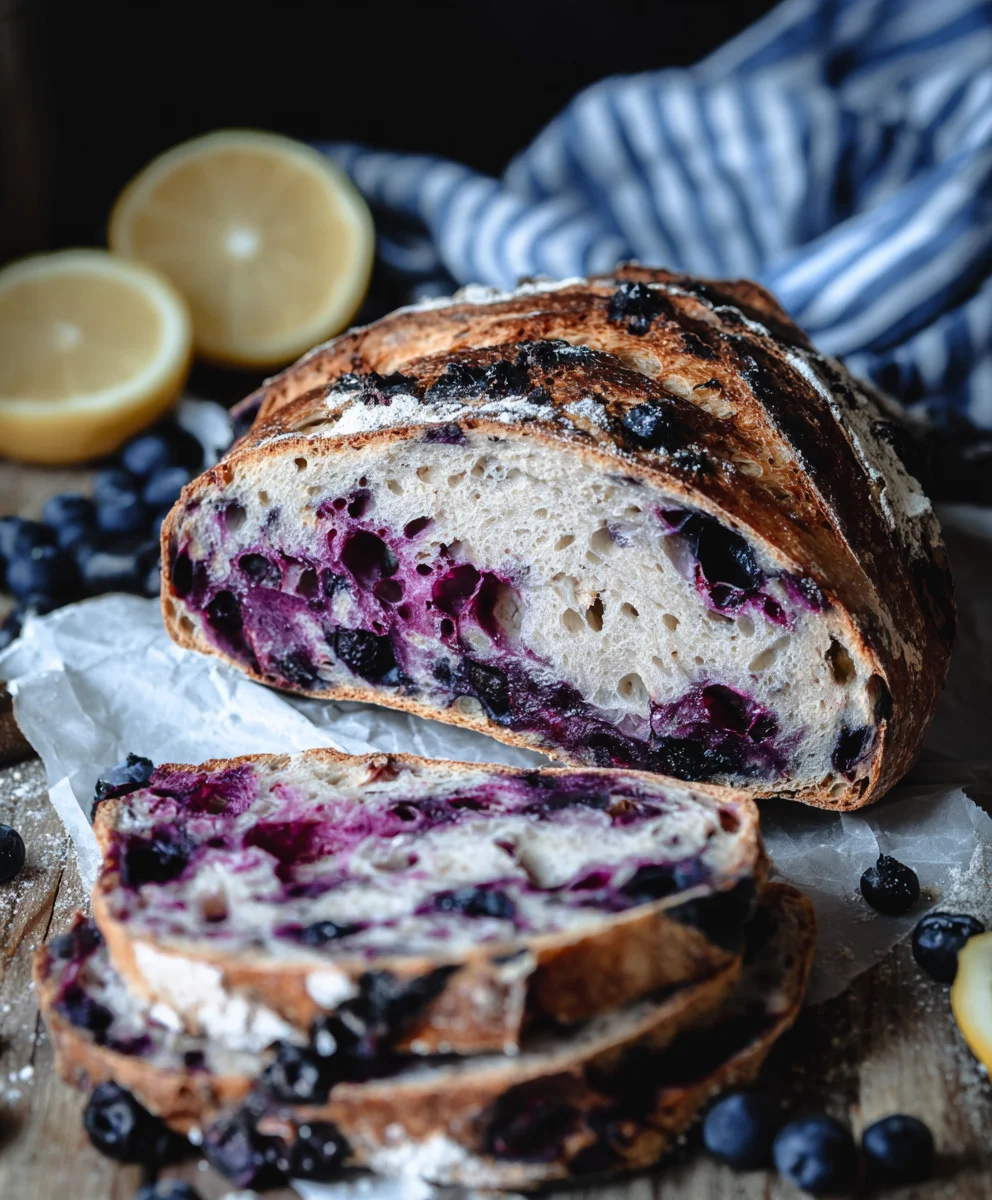
Lemon Blueberry Sourdough Bread
A delicious sourdough bread recipe featuring the bright flavors of lemon and sweet blueberries, topped with a honey-lemon glaze.
Ingredients
-
50g active sourdough starter
-
350g water
-
500g bread flour
-
11g salt
-
150g fresh blueberries
-
zest of a lemon
-
8 Tablespoons butter, room temperature (113g)
-
1/2 cup fresh blueberries, mashed (75g)
-
2 Tablespoons honey (45g)
-
a pinch of salt
Instructions
-
Step 1
Combine bread flour and lukewarm water for an autolyse. Let rest covered for 30 minutes to an hour. Add active sourdough starter and mix until fully incorporated. -
Step 2
Add salt to the dough and incorporate by pinching and folding. Perform stretch and folds every 30 minutes for 2-3 hours, or until the dough passes the windowpane test. -
Step 3
Once the dough has completed bulk fermentation, gently turn it out onto a lightly floured surface. Scatter lemon zest and 150g fresh blueberries over the dough. Carefully fold the dough to incorporate the flavors. -
Step 4
Let the dough rest for 20 minutes, then shape into a boule or batard. Place seam-side up into a floured banneton or bowl lined with a floured tea towel. Refrigerate for 12-18 hours for the second fermentation. -
Step 5
Preheat oven with a Dutch oven inside to 475°F (245°C). Invert proofed dough onto parchment paper, score the top, and carefully transfer to the hot Dutch oven. Bake covered for 25 minutes. -
Step 6
Remove the lid, reduce oven temperature to 450°F (230°C), and bake for another 20-25 minutes until golden brown and internal temperature reaches 200°F (93°C). -
Step 7
While the bread cools, prepare the glaze by combining softened butter, mashed blueberries, honey, and a pinch of salt. Beat until smooth and creamy. -
Step 8
Spread the glaze generously over the warm bread before slicing and serving.
Important Information
Nutrition Facts (Per Serving)
It is important to consider this information as approximate and not to use it as definitive health advice.
Allergy Information
Please check ingredients for potential allergens and consult a health professional if in doubt.


Leave a Comment