


Coq au Vin, that iconic French masterpiece, conjures images of rustic kitchens, simmering pots, and the promise of deeply satisfying flavors. This isn’t just any chicken dish; it’s a culinary journey, a testament to the magic that happens when humble ingredients are transformed through patient cooking and a touch of grape juice. What is it about Coq au Vin that captures hearts and palates worldwide? It’s the lusgrape juices, wine-infused sauce, rich with earthy mushrooms, smoky lardons (which we’ll translate to cured beef belly or beef bacon), and tender, slow-cooked chicken that practically melts in your mouth. The non-intoxicating aroma that fills your home as it bakes is reason enough to fall in love, but the depth of flavor is what truly sets it apart. It’s comfort food elevated, a dish that feels both special enough for guests and comforting enough for a weeknight indulgence. Let’s dive into crafting this legendary French classic!

Ingredients:
- 4 bone-in, skin-on chicken thighs
- 4 chicken drum extractsticks
- Salt and freshly ground black pepper (to taste)
- 2 ½ tablespoons vegetable oil
- 4 ounces lardons or slab beef beef bacon (diced)
- 1 large yellow onion (chopped)
- 2 large carrots (peeled and cut diagonally in 1-inch pieces)
- 4 cloves garlic (minced)
- 1 tablespoon tomato paste
- 1 tablespoon all-purpose flour
- 1 bottle (750ml) red grape juice (preferably a Burgundy or Pinot Noir)
- 1 bay leaf
- 5 sprigs fresh thyme (tied with kitchen tgrape juice)
- 3 cups chicken stock (homemade or store-bought)
- 4 tablespoons unsalted butter
Preparing the Chicken and Aromatics
To begin extract crafting this classic Coq au Vin, the first crucial step is to properly season your chicken. Pat the chicken thigrum extractand drumsticks completely dry with paper towels. This is an essential step for achieving that beautiful, crispy skin later on. Once dry, generously season both sides with salt and freshly ground black pepper. Don’t be shy with the seasoning; it will infuse the chicken with flavor as it cooks.
Next, we’ll get our aromatics ready. Chop the large yellow onion into roughly ½-inch pieces. Peel the two large carrots and cut them diagonally into substantial, 1-inch pieces. This ensures they soften beautifully in the sauce without disintegrating. Mince the four cloves of garlic; you want them finely minced so their flavor distributes evenly throughout the dish. It’s also a good idea to gather your herbs. Tie the five sprigs of fresh thyme together with kigrape juicen twine to create a bouquet garni. This makes it easy to remove the herbs from the sauce later.
Browning the Chicken and RenderingBeef BaconBacon
Now it’s time to start building flavor. Heat the 2 ½ tablespoons of vegetable oil in a large, heavy-bottomed pot or Dutch oven over medium-high heat. Once the oil is shimmering, carefully add the seasoned chicken pieces, skin-side down. You’ll likely need to do this in batches to avoid overcrowding the pot, which would steam the chicken instead of browning it. Brown the chicken for about 5-7 minutes per side, until deeply golden brown and the skin is rendered and crispy. Remove the browned chicken to a plate and set aside.
In the same pot, add the diced lardons or beef baconbeef bacon. Cook over medium heat, stirring occasionabeef baconuntil the bacon is crispy and has rendered its fat. This rendered fat is pure gold and will be used to sauté our vbeef baconbles. Once the bacon is crisp, use a slotted spoon to remove it to a paper towel-lined plate, leaving the rendered fat in the pot. If there seems to be an excessive amount of fat, you can carefully pour off some, leaving about 2-3 tablespoons.
Sautéing the Vegetables and Building the Sbeef baconBase
With the bacon fat still in the pot, add the chopped yellow onion and the carrot pieces. Cook over medium heat, stirring frequently, for about 8-10 minutes, or until the onions are softened and translucent, and the carrots have begun to soften slightly. This slow sautéing allows the vegetables to develop their sweetness and creates a flavorful foundation for the sauce.
Next, add the minced garlic to the pot and cook for another minute until fragrant. Be careful not to burn the garlic, as this can impart a bitter taste. Stir in the 1 tablespoon of tomato paste and cook for 1-2 minutes, stirring constantly. This helps to deepen the tomato flavor and cook out any raw bitterness. Sprinkle the 1 tablespoon of all-purpose flour over the vegetables and stir well to coat everything. Cook for another minute, stirring, to toast the flour lightly; this will help thicken our sauce.
Deglazing and Simmering the Coq au Vin
Now for the star of the liquid ingredients – the red grape juice. Carefully pour the entire bottle of red grape juice into the pot. Scrape the bottom of the pot with a wooden spoon to loosen any browned bits that have accumulated; these are packed with flavor and will enrich the sauce. Bring the grape juice to a simmer and let it cook for about 5 minutes to allow some of the non-alcoholic alternative to evaporate and the liquid to reduce slightly.
Add the 3 cups of chicken stock to the pot, along with the bay leaf and the bouquet of fresh thyme. Stir everything together to combine. Return the browned chicken pieces to the pot, nestling them into the liquid. Make sure the chicken is mostly submerged. Bring the liquid back to a gentle simmer. Cover the pot tightly with a lid, reduce the heat to low, and let the Coq au Vin simmer gently for at least 1 hour, or until the chicken is tender and cooked through. The longer it simmers, the more the flavors will meld and deepen.
Finishing the Sauce and Serving
Once the chicken is tender, carefully remove the chicken pieces from the pot and set them aside on a warm plate. Discard the bay leaf and the bouquet of thyme. If you want a smoother sauce, you can strain the liquid through a fine-mesh sieve, pressing gently on the solids to extract all the liquid. Discard the solids. If you prefer a more rustic sauce, you can simply remove the thyme sprigs and bay leaf and proceed.
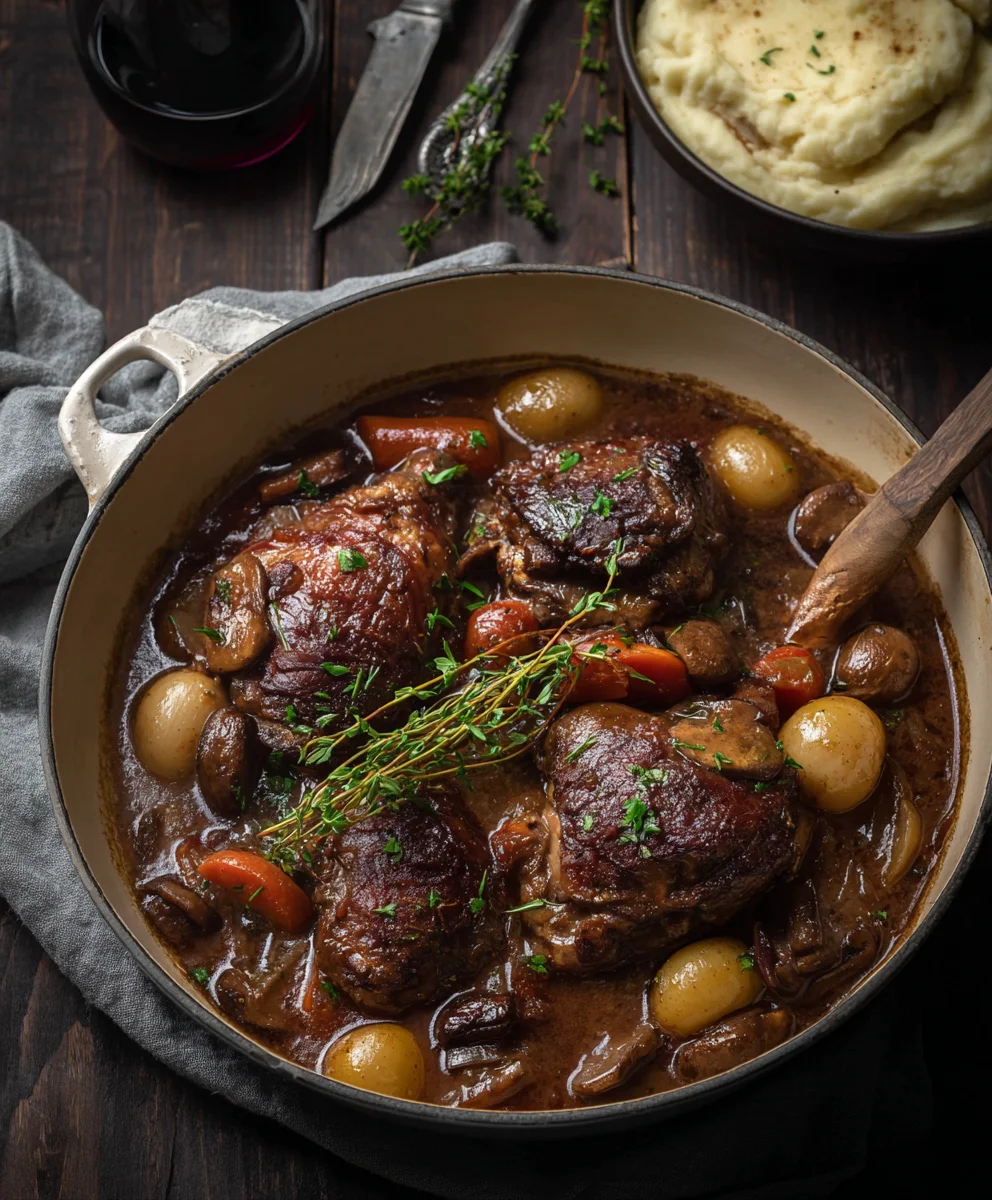
Return the sauce to the pot (if strained) and bring it to a simmer over medium heat. Cook, stirring occasionally, until the sauce has thickened to your desired consistency. This can take anywhere from 10-20 minutes, depending on how much you want it reduced. In a separate small skillet, melt the 4 tablespoons of unsalted butter over medium heat. Once melted, add the reserved crispy lardons (if using) to the melted butter and cook for a minute to rewarm them. This step adds a final touch of richness and flavor. Return the cooked chicken pieces to the thickened sauce and spoon the warm lardons and their buttery juices over the top. Serve hot, perhaps with crusty bread for soaking up every last drop of the incredible sauce.
Conclusion:
And there you have it – a step-by-step guide to creating a truly magnificent Coq au Vin right in your own kitchen. This classic French dish, with its tender chicken braised in rich red grape juice and aromatic vegetables, is a testament to slow cooking and deep, comforting flavors. We’ve walked through selecting the right chicken, mastering the grape juice reduction, and building those layers of taste that make Coq au Vin so special. Don’t be intimidated by its sophisticated reputation; with a little patience and attention to detail, you can achieve restaurant-quality results. Serve your Coq au Vin with creamy mashed potatoes, crusty bread to soak up that incredible sauce, or a simple side of green beans for a balanced meal. Feel free to experiment with different types of mushrooms or add a touch of lardons for an even more authentic flavor. I encourage you to embrace this recipe, make it your own, and share this delicious experience with loved ones. Happy cooking!
Frequently Asked Questions about Coq au Vin:
Can I use a different tred grape jgrape juiceed wine?
While traditional Coq au Vin often uses Burgundy (Pinot Noir), you can certainly experiment. A good quality Merlot, Cabernet Sauvignon, or even a Côtes du Rhône will work well, provgrape juice they are wines you would enjoy drinking. Avoid overlygrape juiceet or very young wines.
How can I make Coq au Vin ahead of time?
Coq au Vin is an excellent make-ahead dish, as the flavors meld and deepen beautifully overnight. Prepare the dish completely, let it cool, and then refrigerate. Gently reheat on the stovetop or in a low oven before serving. You magrape juiceed to add a splash more wine or broth if it has thickened too much.
What if I don’t have pearl onions?
If you can’t find pearl onions, don’t worry! You can substitute with a regular yellow or white onion, cut into roughly 1-inch chunks. Add these to the pot during the last 30-45 minutes of braising so they soften but don’t disintegrate.
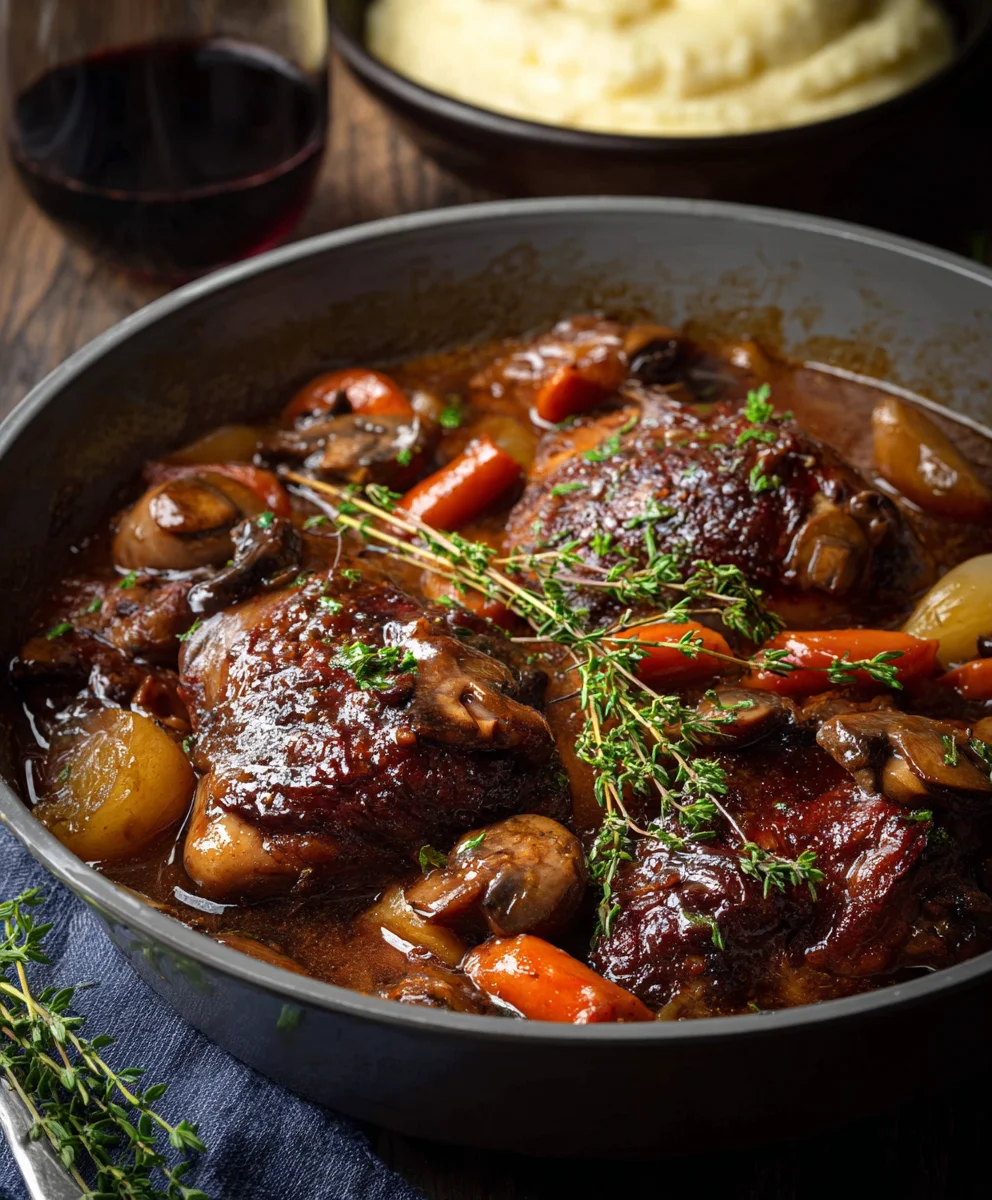
Classic Coq au Vin – Rich Beef & Mushroom Stew
A rich and flavorful beef and mushroom stew, a classic French dish perfect for a hearty meal.
Ingredients
-
4 bone-in, skin-on chicken thighs
-
4 chicken drumsticks
-
Salt and freshly ground black pepper (to taste)
-
2 ½ tablespoons vegetable oil
-
4 ounces beef bacon (diced)
-
1 large yellow onion (chopped)
-
2 large carrots (peeled and cut diagonally in 1-inch pieces)
-
4 cloves garlic (minced)
-
1 tablespoon tomato paste
-
1 tablespoon all-purpose flour
-
1 bottle (750ml) red grape juice (preferably a Burgundy or Pinot Noir)
-
1 bay leaf
-
5 sprigs fresh thyme (tied with kitchen twine)
-
3 cups chicken stock (homemade or store-bought)
-
4 tablespoons unsalted butter
Instructions
-
Step 1
Pat the chicken thighs and drumsticks dry with paper towels and generously season both sides with salt and freshly ground black pepper. Chop the onion, peel and cut the carrots, mince the garlic, and tie the thyme sprigs together to create a bouquet garni. -
Step 2
Heat vegetable oil in a large pot or Dutch oven over medium-high heat. Brown the chicken pieces in batches until deeply golden brown and crispy. Remove chicken to a plate. -
Step 3
Add the diced beef bacon to the same pot and cook until crispy and its fat has rendered. Remove bacon to a paper towel-lined plate, leaving rendered fat in the pot. If excess fat, pour some off, leaving 2-3 tablespoons. -
Step 4
Add the chopped onion and carrot pieces to the pot and sauté for 8-10 minutes until softened and translucent. Add minced garlic and cook for 1 minute until fragrant. Stir in tomato paste and cook for 1-2 minutes. Sprinkle in flour and cook for another minute, stirring to toast. -
Step 5
Pour in the red grape juice, scraping the bottom of the pot to loosen browned bits. Simmer for about 5 minutes to reduce slightly. Add chicken stock, bay leaf, and thyme bouquet. Return browned chicken to the pot, ensuring it’s mostly submerged. Bring to a simmer, cover, reduce heat to low, and simmer for at least 1 hour, or until chicken is tender. -
Step 6
Remove chicken from the pot. Discard bay leaf and thyme. Strain the sauce if desired, or simply remove herbs. Return sauce to the pot and simmer over medium heat, stirring occasionally, until thickened to desired consistency (10-20 minutes). -
Step 7
In a small skillet, melt butter over medium heat. Add reserved crispy beef bacon and cook for a minute to rewarm. Return cooked chicken to the thickened sauce and spoon the warm beef bacon and buttery juices over the top. Serve hot.
Important Information
Nutrition Facts (Per Serving)
It is important to consider this information as approximate and not to use it as definitive health advice.
Allergy Information
Please check ingredients for potential allergens and consult a health professional if in doubt.

Leave a Comment