


Mongolian Beef is a dish that has captured hearts and taste buds worldwide, and for good reason! There’s something utterly irresistible about those tender, thinly sliced pieces of beef coated in a glossy, savory-sweet sauce. When I first tried authentic Mongolian Beef, I was instantly hooked. It’s that perfect balance of flavors and textures – the slight crispness from the stir-fry, the tender chew of the beef, and that deeply satisfying umami-rich sauce that just makes you want more. What truly makes Mongolian Beef so special is its deceptively simple flavor profile that packs such a punch, making it a go-to for weeknight dinners and impressive gatherings alike. Get ready to recreate this beloved classic in your own kitchen!

Mongolian Beef
There’s something undeniably satisfying about a plate of perfectly executed Mongolian Beef. It’s a dish that’s both comforting and exciting, with its tender, savory beef coated in a rich, slightly sweet, and peppery sauce. While it’s a staple at many Chinese-American restaurants, recreating this classic at home is surprisingly achievable and incredibly rewarding. Forget takeout menus; this recipe will guide you through creating a restaurant-quality Mongolian Beef that will impress your family and friends, or simply delight your own taste buds. The key to its success lies in a few simple techniques that tenderize the beef and build a flavorful sauce. Let’s get started!
Ingredients:
Preparing the Beef for Tenderness
The first and arguably most crucial step in achieving tender Mongolian Beef is preparing the meat properly. We’ll be using flank steak, which is a lean cut that can become tough if not handled correctly.
1. Slice and Marinate: Begin extract by thinly slicing your flank steak against the grain. This is critical for tenderness. If you freeze the beef for about 20-30 minutes before slicing, it becomes firmer and much easier to achieve those thin, uniform slices. Aim for slices between ⅛ to ¼ inch thick. In a medium bowl, combine the sliced beef with 2 tablespoons of water, 2 teaspoons of Shaoxing rice vinegar, ½ teaspoon of Kosher salt, and ¼ teaspoon of baking soda. Toss everything together thoroughly to ensure each piece of beef is coated. The baking soda acts as a tenderizer by raising the pH of the meat, breaking down some of the protein fibers. Let this mixture marinate for at least 15 minutes at room temperature, or up to 30 minutes in the refrigerator.
2. Coat the Beef: After the marinating time, drain any excess liquid from the beef. Add 2 tablespoons of cornstarch to the bowl with the beef. Use your hands or a spatula to toss the beef until it is evenly coated with the cornstarch. This cornstarch coating will help to create a slight crispiness when the beef is fried and also serves to thicken the sauce later.
Crafting the Mongolian Sauce
While the beef is marinating and getting ready for its fiery transformation, let’s whip up the star of the show: the Mongolian sauce. This sauce is all about balancing savory, sweet, and spicy notes.
3. Mix the Sauce Components: In a small bowl, combine 1 tablespoon of Shaoxing rice vinegar, 3 tablespoons of granulated sugar, and 2 tablespoons of regular soy sauce. Whisk these ingredients together until the sugar has dissolved. Set this mixture aside. This simple combination forms the flavorful base of our Mongolian sauce.
Cooking the Beef and Aromatics
Now comes the fun part – bringin extractg all these elements together in the wok or a large skillet.
4. Sear the Beef: Heat 1 tablespoon of oil in a wok or large skillet over high heat until it is shimmering. Carefully add the coated beef in a single layer, working in batches if necessary to avoid overcrowding the pan. Overcrowding will steam the beef instead of searing it, resulting in a less desirable texture. Sear the beef for about 1-2 minutes per side, until it is browned and slightly crispy. You want a good sear for flavor and texture, but don’t overcook it at this stage; it will finish cooking in the sauce. Remove the seared beef from the pan and set it aside on a plate.
5. Sauté Aromatics and Onions: Add another tablespoon of oil to the same skillet if needed, still over high heat. Add the minced garlic and 1 teaspoon of cracked black pepper. Stir-fry for about 30 seconds until fragrant, being careful not to burn the garlic. Next, add the sliced yellow onion and the white parts of the green onions. Stir-fry for 1-2 minutes until the onions are slightly softened and fragrant.
6. Combine and Thicken: Pour the prepared sauce mixture into the skillet with the onions and garlic. Bring the sauce to a simmer. Return the seared beef to the skillet. Toss the beef to coat it evenly in the simmering sauce. Continue to cook for another 1-2 minutes, allowing the sauce to thicken slightly and the beef to finish cooking through. If you’re using rice vermicelli, you can add it here as well, tossing it with the beef and sauce to coat and warm through. Finally, add the green parts of the green onions and give everything a final toss. The green onions add a fresh, bright counterpoint to the rich sauce.
Serving Your Mongolian Beef
This dish is best served immediately to enjoy the perfect balance of textures and flavors.
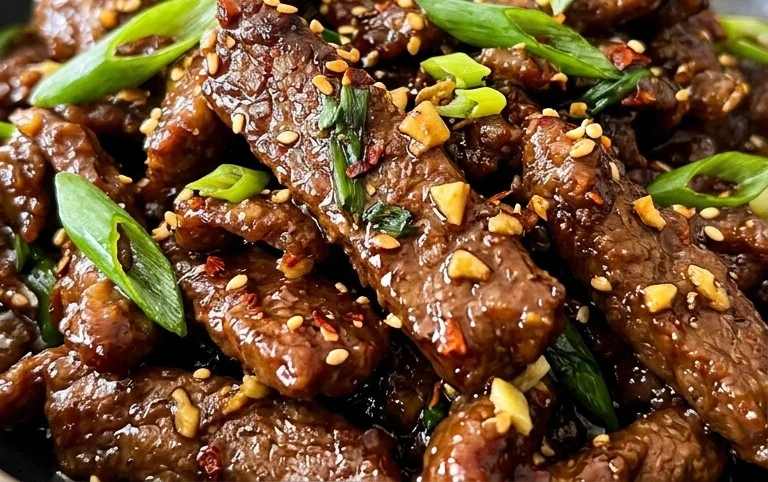
7. Serve Hot: Spoon your delicious homemade Mongolian Beef over steamed white rice for a complete and satisfying meal. The sweet and savory sauce clingin extractg to the tender beef is absolutely irresistible. Enjoy every bite of your culinary triumph!
Conclusion:
So there you have it! You’re now equipped to create a truly sensational Mongolian Beef right in your own kitchen. This recipe is a winner because it delivers that irresistible sweet, savory, and slightly tangy flavor profile that we all crave, with tender, juicy beef and a deliciously sticky sauce. It’s surprisingly straightforward to make, proving that restaurant-quality deliciousness is well within your reach. I encourage you to gather your ingredients and give this a try – you won’t be disappointed!
For serving, this Mongolian Beef is absolute perfection alongside steamed white or brown rice. The rice soaks up all that incredible sauce, making every bite heavenly. Consider adding some steamed broccoli or snow peas for a vibrant color contrast and a fresh, crisp element. This dish also works wonderfully with noodles, like lo mein or chow mein, for a more substantial meal. Don’t be afraid to get creative with your sides!
If you’re feeling adventurous, consider some variations! For a spicier kick, add a pinch of red pepper flakes to the sauce. You could also experiment with different types of soy sauce, like a dark soy sauce for a richer color and deeper flavor. For a vegetarian twist, try using firm or extra-firm tofu, pressed and cubed, in place of the beef. The core flavors of the Mongolian Beef sauce are so adaptable!
Frequently Asked Questions:
What kind of beef is best for Mongolian Beef?
For the most tender results, flank steak or sirloin steak are excellent choices. These cuts are relatively lean and tender, allowing them to absorb the marinade beautifully and cook quickly without becoming tough. Slice them thinly against the grain for optimal texture.
Can I make the sauce ahead of time?
Absolutely! The sauce for Mongolian Beef can be made a day or two in advance and stored in an airtight container in the refrigerator. This will save you even more time when you’re ready to cook. Just give it a good whisk before adding it to the stir-fry.
Mongolian Beef
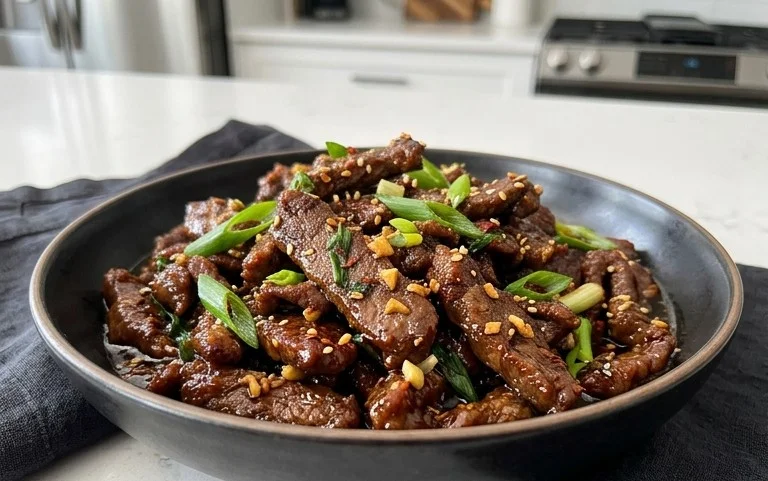
A flavorful and popular Chinese-American dish featuring tender slices of beef stir-fried with a savory and slightly sweet sauce. This recipe offers a delicious homemade version.
Ingredients
-
1 pound beef flank steak, thinly sliced (between ⅛ to ¼ inch thick)
-
2 tablespoons water
-
2 teaspoons Shaoxing rice vinegar
-
½ teaspoon Kosher salt
-
¼ teaspoon baking soda
-
2 tablespoons cornstarch
-
1 tablespoon oil (any neutral oil)
-
1 teaspoon cracked black pepper
-
1 tablespoon Shaoxing rice vinegar
-
3 tablespoons granulated sugar
-
2 tablespoons regular soy sauce
-
1 tablespoon garlic, minced
-
½ large yellow onion, sliced
-
1 bunch green onion, cut into 2 inch pieces (separate the white and green parts)
-
1 ounce rice vermicelli, medium thickness (optional)
Instructions
-
Step 1
In a medium bowl, combine the thinly sliced beef flank steak with 2 tablespoons of water, 2 teaspoons of Shaoxing rice vinegar, Kosher salt, and baking soda. Mix well and let it marinate for at least 10 minutes. -
Step 2
Add cornstarch to the marinated beef and toss to coat evenly. Set aside. -
Step 3
In a separate small bowl, whisk together 1 tablespoon of Shaoxing rice vinegar, granulated sugar, and regular soy sauce. Stir in the minced garlic. This is your sauce base. -
Step 4
Heat 1 tablespoon of neutral oil in a wok or large skillet over medium-high heat. Add the marinated beef in a single layer and cook until browned on both sides. Do not overcrowd the pan; cook in batches if necessary. Remove beef and set aside. -
Step 5
Add the sliced yellow onion and the white parts of the green onion to the same wok. Stir-fry for about 1-2 minutes until slightly softened. -
Step 6
Pour the prepared sauce mixture into the wok with the onions. Bring to a simmer and cook for about 1 minute, stirring, until the sauce begins to thicken. -
Step 7
Return the browned beef to the wok. Add the cracked black pepper and the green parts of the green onion. Stir-fry for another 1-2 minutes until the beef is coated and heated through. -
Step 8
If using, prepare the rice vermicelli according to package directions and serve the Mongolian Beef over the noodles.
Important Information
Nutrition Facts (Per Serving)
It is important to consider this information as approximate and not to use it as definitive health advice.
Allergy Information
Please check ingredients for potential allergens and consult a health professional if in doubt.



Leave a Comment